Biomimicry nature inspired engineering is the practice of solving complex human problems by imitating biological models, systems, and structures found in the natural world.
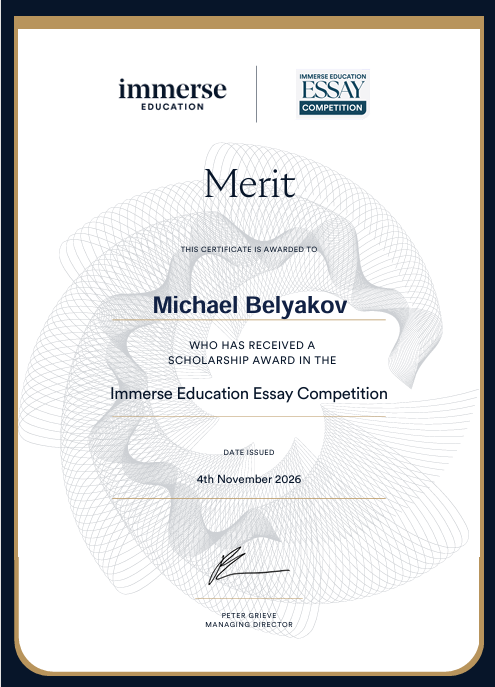
My essay entry explored how these natural principles drive advancements in technology, materials, and design for the Immerse Education Essay Competition. I discovered how biomimicry is currently revolutionizing modern aviation, examined whether engineers can ever truly surpass natural systems, and looked at the specific inventions shaping our future.
Janine Benyus, who popularized the biomimicry term in 1997, suggests that we view nature through three specific lenses: as a mentor, a model, and a measure. In this framework, nature is a model to be imitated, a mentor that provides lessons on efficiency, and a measure that sets the ecological standard for what works and what lasts. My fascination with how complex systems function.
The Immerse Education Essay Competition is an international academic challenge designed for students aged 13 to 18 who seek to explore their subjects at a university level. This year’s prompt regarding the intersection of biology and engineering immediately caught my attention.
Engineering
Should modern engineers always look to nature to solve mechanical problems (like mimicking bird wings for airplanes), or can human-designed technology outperform biological evolution?
Inspired by Biomimetics (copying nature's designs) taught in the first year of the Cambridge Engineering degree. It asks if millions of years of natural evolution create better structures than human invention.